
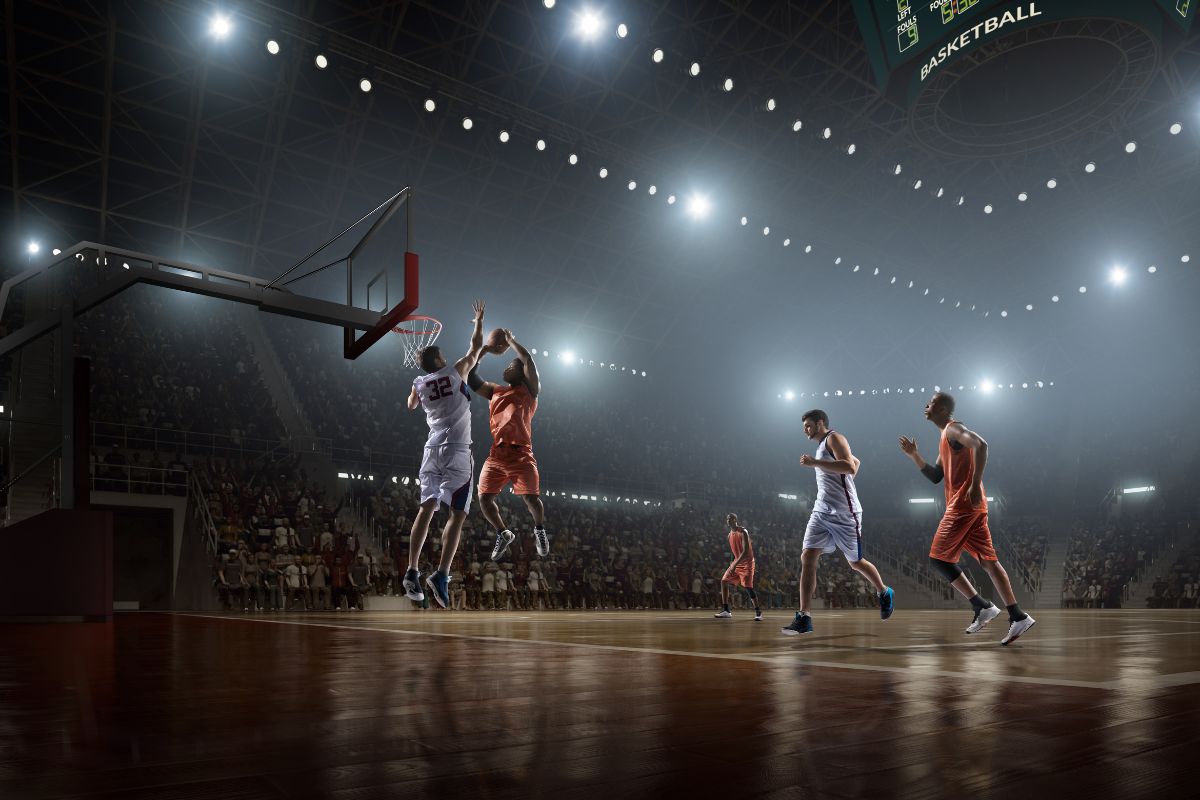
Basketball, the iconic sport of gymnasiums and hardwood courts, has for decades captivated both amateurs and professionals with its intensity and technical prowess. From Michael Jordan’s feats to recent NBA records, this sport continues to evolve and innovate. While the classic 5×5 format remains at the heart of competitions, a faster and more intense variant, 3×3, has gained significant momentum in recent years. This dynamic format, now an Olympic discipline, has opened a new chapter in basketball history. But with its meteoric rise, a question emerges: is 3×3 basketball truly the future of this sport?
A Spectacular and Universal Format
3×3 basketball, born on streets and playgrounds, quickly won over sports enthusiasts with its simplicity and speed. Unlike 5×5, 3×3 is played on a half-court with a single basket and simplified rules. Each match lasts only 10 minutes or ends when a team reaches 21 points, ensuring a relentless pace. The constant intensity and player creativity captivate spectators, whether novice or expert.
During the recent Olympics, this format showed its full potential. Spectacular finals, such as the one between the Netherlands and France, proved that 3×3 could rival 5×5 in terms of suspense and emotion. But to achieve dream records, teams must adapt to this fast and unpredictable rhythm. This adaptation requires specific skills, reinforcing the idea that 3×3 is much more than a scaled-down version of traditional basketball: it’s a sport in its own right.
Economic and Structural Challenges
Despite its growing popularity, 3×3 faces significant challenges. The 2024 FIBA 3×3 World Tour final in Hong Kong, where Amsterdam defeated Paris in a memorable match (22-20), revealed one of the major obstacles: lack of funding for teams. After two years of success, Paris 3×3 club announced its dissolution due to insufficient resources. Without solid sponsors, even the best teams risk disappearing.
However, players like Franck Seguela, Olympic silver medalist, refuse to give up. The point guard role, crucial in both 3×3 and 5×5, symbolizes these athletes’ hope and determination. With a clear strategy and committed partners, building a sustainable structure for this expanding sport is possible.
The Importance of Equipment
To excel in 3×3 basketball, players must be prepared both mentally and physically. An often overlooked but crucial detail is wearing the right shoes to play. With rapid movements and frequent direction changes, shoe choice can make the difference between average and exceptional performance. Models designed for 3×3 offer better grip and support adapted to outdoor courts, where this format is often played.
Towards a Promising Future
Despite the challenges, 3×3 basketball has solid assets to establish itself on the world stage. Its recognition as an Olympic sport has strengthened its legitimacy and attracted new talent. Competitions like the FIBA 3×3 World Tour continue to attract an international audience, and players compete in ingenuity to make this unique format shine.
However, for 3×3 to fully realize its potential, structural challenges must be addressed, particularly in terms of funding and training. With solid organization and support from sports authorities, this format can not only endure but also revolutionize basketball as we know it today.

Basketteur de moins d’1m80, je prends la plume pour parler basket, cyclisme ou football. Je ne crie pas “Go Spurs Go” mais je suis Wemby de près. Et tant pis pour mes Trail Blazers qui végètent à l’Ouest…